


Rural Financing
7 Rural Property Buying Tips for Alberta Acreage Buyers
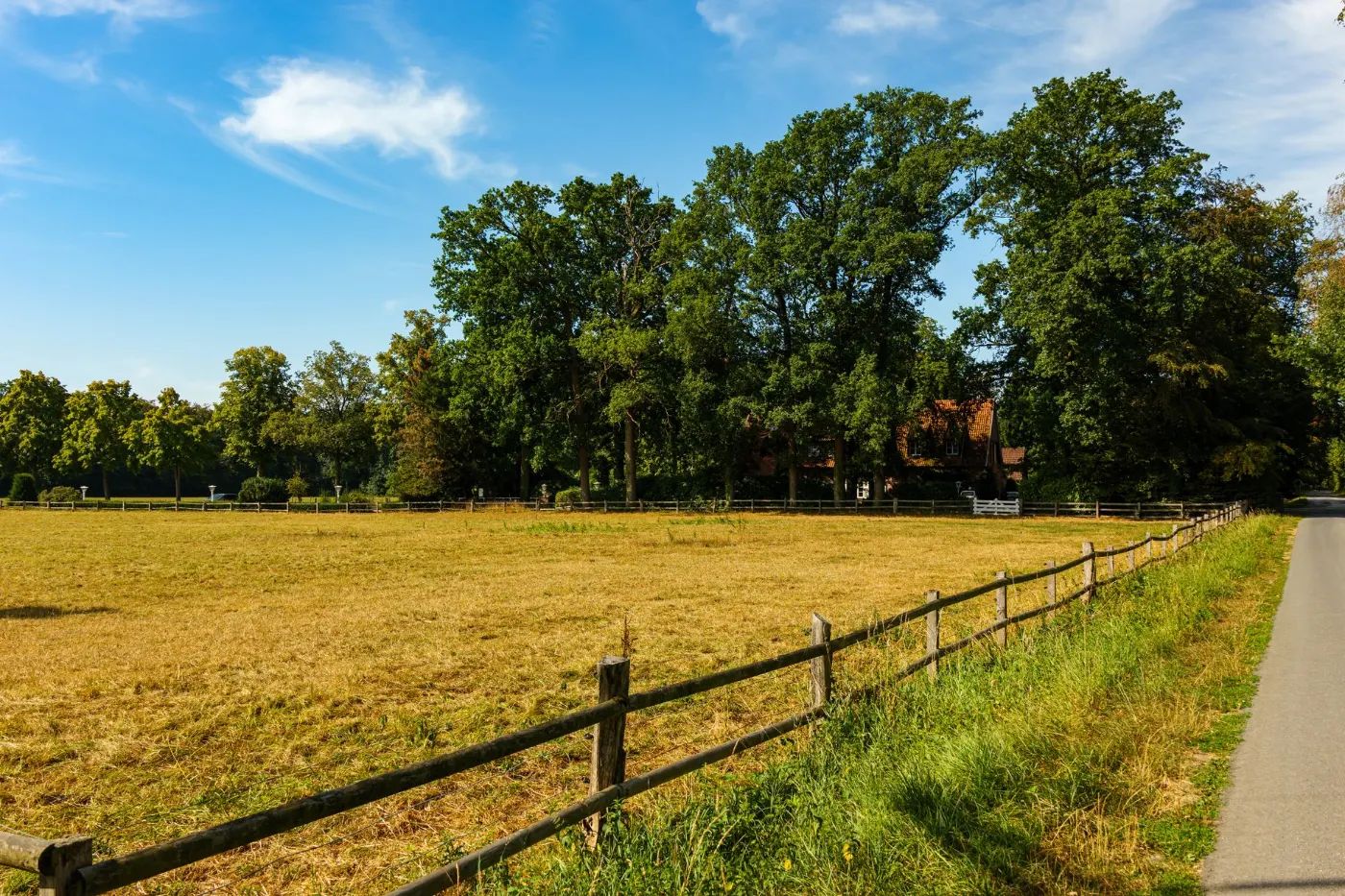
The most useful rural property buying tip for Alberta is to treat due diligence as the main event: check the well, the septic system, the title, the zoning, the road access and the survey before you firm up an offer. Well-located acreages near Calgary, Edmonton and Olds can sell quickly, so line that work up before you find the right listing.
Rural deals rarely fall apart over price. They fall apart over a water well with no flow test, a septic system with no permit, or a title that carries a surface lease nobody read. Doing that checking before the right listing appears is what lets you write a clean, confident offer.
Here is a seven-point due-diligence checklist for rural property in Alberta, from a hobby farm outside Olds to a treed parcel north of Edmonton. Buying a working farm? The financing works differently, and this guide to financing agricultural property in Alberta covers it.
What should you line up before you tour a single acreage?
Two things: a pre-approval written for rural property, and a title search you have actually read. Both take a day or two and both head off problems that can sink an Alberta acreage deal. Do them before you fall in love with a place.
1. Get a rural pre-approval, not a city pre-approval
A standard pre-approval confirms your income and credit. It says nothing about whether the lender will finance 40 acres with a shop, a shared well, or a manufactured home on screw piles. Those are lender policy questions, and the answers vary from lender to lender.
Lender rules on parcel size, second dwellings, outbuildings and down payment differ widely, and many lenders value only the house and a limited number of acres. This guide to how acreage mortgages and down payments work covers those rules in detail.
Before you shop, tell me the parcel size, water source, sewage type and outbuildings you expect, and I will tell you which lenders stay in the room. That is the whole point of rural financing for Alberta acreages.
2. Pull the title before you write the offer
Alberta titles are public and inexpensive to order through Alberta Land Titles or a registry agent. I want to see the parcel size, any registered right of way, utility easements, restrictive covenants, and surface leases from oil and gas activity. Rural land carries all of this far more often than urban lots.
A common assumption is that surface lease income helps you qualify. It usually does not. Many lenders do not count annual lease payments as qualifying income, and some underwriters view an active wellsite as a value reduction rather than a bonus.
Land itself is getting more expensive, which raises the stakes. Farm Credit Canada reported in March 2026 that Alberta farmland values rose again in 2025, faster than in most provinces. When land is a big part of the price, title details stop being paperwork and start being money.
How do you handle water and septic without losing the deal?
Order both tests the day your offer is accepted, and use people who work in that county. Lenders and default insurers want written proof of potable water, adequate flow, and a permitted private sewage system. In rural Alberta, booking those trades can take longer than your condition period allows.
3. Test the well properly, not casually
A bacteria test alone is not enough. I want a flow test showing sustained gallons per minute, plus potability results covering coliform, nitrates and total dissolved solids. Lenders and default insurers may set a minimum sustained flow, and a well that falls short can limit your financing options. Note that Alberta Health Services will not test water samples for real estate purposes, so for a purchase use an accredited private lab.
I recommend checking the drilling report before you spend money on testing. The Alberta Water Well Information Database holds water well drilling reports and yield tests, and you can view and print individual well records to see what the driller recorded when the well was completed. A 1968 well at 60 feet in a dry township behaves very differently than a 2019 well at 240 feet.
4. Confirm the septic permit exists and the system is legal
This is where files quietly die. The Government of Alberta notes that private sewage systems fall under the Private Sewage Disposal Systems Regulation, which adopts the 2021 Alberta Private Sewage Systems Standard of Practice, and that contractors need a current certificate of competency to obtain permits.
Practically, that means two questions. Does the county have a permit on file for the system that is actually in the ground? And is it the type of system a lender will accept? Older acreages may have systems installed or upgraded without a permit, and not every lender accepts every system type. Replacing a failed treatment field is a major expense.
A missing permit can often be resolved, but it takes time. Build that possibility into your plan and your mortgage payment calculations so a surprise repair does not wreck your budget.
What actually makes your rural offer win in Alberta?
Speed backed by preparation. Sellers accept the offer most likely to close, not just the highest one. That means realistic condition timelines, insurance already quoted, no surprises on zoning or access, and a down payment that survives an appraisal which values less land than you are buying.
5. Check zoning, road access and the Real Property Report
Every Alberta county sets what you can do on a parcel through its land use bylaw. Before you write, confirm the parcel's land use district allows what you plan to do there, such as a second home, a home business, livestock or a future subdivision. Near Olds, for example, Mountain View County's land use bylaw and land use maps are posted on the county's bylaws page.
Then check access. Confirm the property fronts a county road or has registered access across neighbouring land, and ask the county whether that road is maintained year round. Finally, ask for a current Real Property Report. The Alberta Land Surveyors' Association explains that an RPR is prepared by an Alberta Land Surveyor and shows the property boundaries, the location of visible improvements, any encroachments, and whether the property meets local land use bylaws. If the parcel is vacant, financing works differently; this guide to financing bare land in Alberta explains how.
6. Confirm insurance, utilities and internet before you remove conditions
Rural insurance is not a formality. Distance to a fire hall, wood heat, roof age and wildfire exposure all affect whether a company will write the policy at all. The Insurance Bureau of Canada noted in 2024 that extreme weather in Alberta caused $3.6 billion in insured losses between 2020 and 2023, so expect insurers to look closely at rural risks.
No binder, no funding. Leaving insurance to the last week risks a delayed closing if carriers decline the property.
Give utilities the same early check. Confirm whether the property has power and natural gas service or relies on propane, and who supplies each. For internet, ask providers to confirm service at the exact land location, not just the general area, since rural coverage can vary over short distances.
7. Write condition periods that match rural reality
Five business days works in Calgary. It does not work when you need a well driller, a septic inspector, a rural appraiser and a county file search. Ask for 10 to 14 days and explain the rural steps involved so the seller understands why.
Longer conditions do not have to mean a slower offer. Come in with a rural mortgage pre-approval already done, trades booked and insurance quoted, and you can move on day one.
Conclusion
Rural buying in Alberta rewards preparation over speed alone. Sort out your lender fit first, read the title and the Real Property Report, confirm zoning and road access, and book the well and septic work immediately. Do that and the rest of this checklist mostly takes care of itself.
A rural purchase is not a city purchase with more land. As a mortgage planner based in Olds who specializes in rural financing, including acreages, hobby farms, remote properties, wells and septic, I can help you plan for those differences before you write an offer.
If you are watching acreage listings anywhere from Olds to Grande Prairie, get in touch with me and we will map out which of my 40 plus lenders fit the property you actually want. Pre-approvals are usually back in under 24 hours, and my services cost you nothing.